

Soil pH in Malawi: How to Test and Improve It
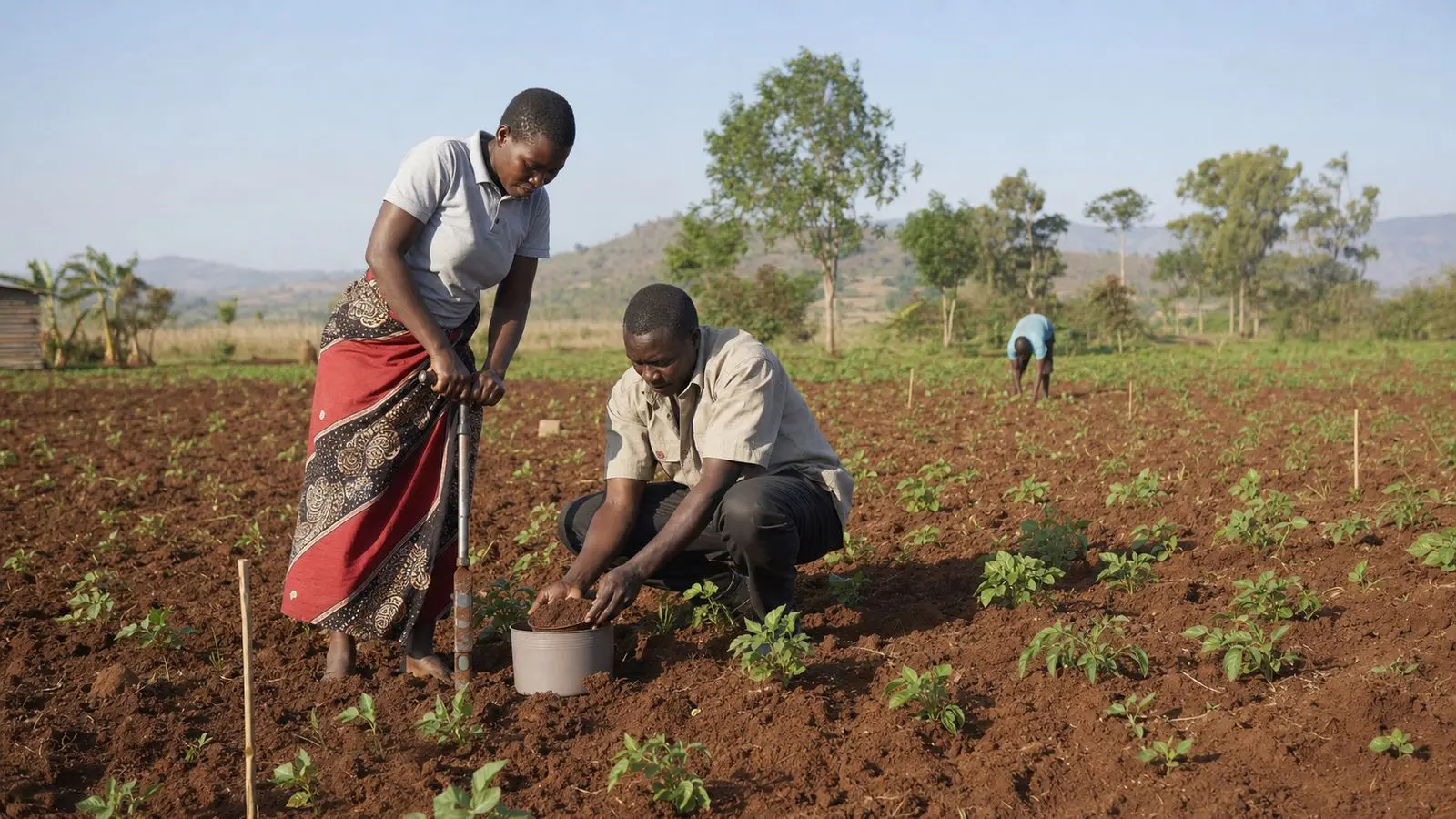
Why can a crop remain weak after fertiliser? One reason may be soil pH, which affects nutrients and biology. A pH result is not a complete lime recommendation. Collect a representative sample and interpret it with local advice.
Why soil pH matters
FAO explains that soil reaction influences nutrients and microbial activity. Many nutrients are available in moderately acidic soil, but the target depends on crop and location. Strong acidity can reduce nutrient use and increase aluminium or manganese risks. Alkaline soil creates different problems and should not receive lime.
Soil acidity matters in parts of Malawi, particularly high-rainfall and high-altitude areas. CIMMYT and CGIAR report that lime returns vary with acidity, yield potential, price and transport cost.
How to collect a representative sample
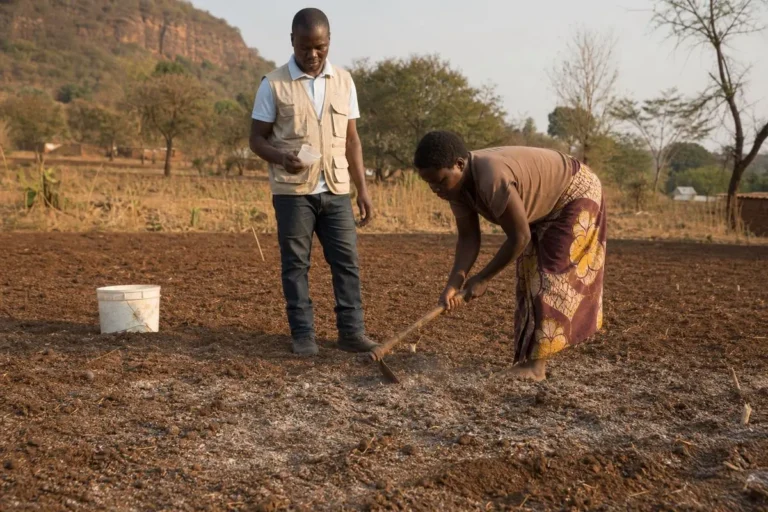
A result is only as useful as the sample. Ask the laboratory or extension office for its required depth, quantity and container, then use a consistent method.
1. Separate areas where soil, slope, crop history or management differs. 2. Avoid termite mounds, manure heaps, edges, wet depressions, paths and spill sites. 3. With a clean auger, hoe or spade, sample several points in a zigzag at the requested depth. 4. Mix samples from one uniform area in a clean bucket. 5. Remove stones and large plant material, then retain the required amount. 6. Label the sample with field, depth, date, previous crop and intended crop.
Testing options
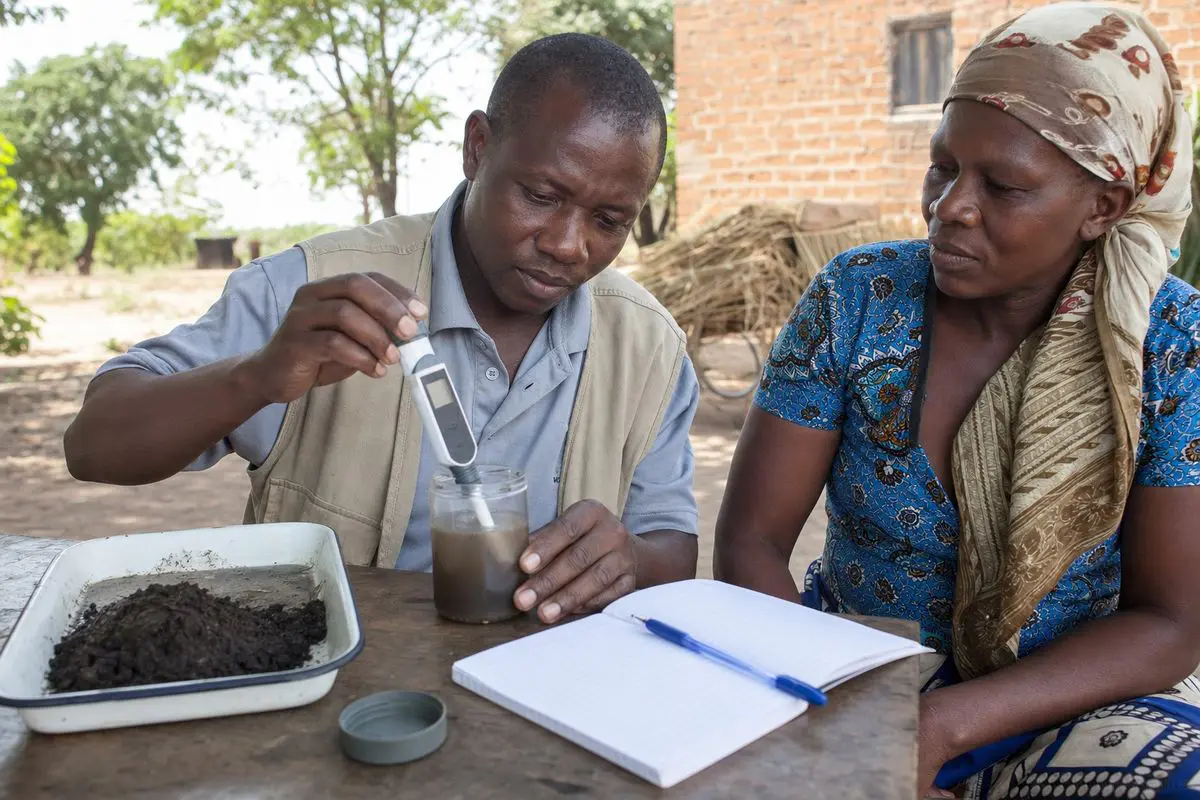
The strongest option is a recognised testing service that reports its method and provides an interpretation or lime requirement. A calibrated pH meter can provide screening information when the operator uses a consistent soil-to-solution ratio and standard buffer solutions.
Record the test method and solution used; different methods are not directly interchangeable.
How to read the result
Use the laboratory’s interpretation first. The following bands are only a broad orientation based on FAO soil-reaction classes.
| pH result | Broad interpretation | Practical next step |
|---|---|---|
| Below 4.6 | Extremely acidic | Seek a laboratory lime requirement and extension advice before treatment. |
| 4.6 to 5.5 | Strongly acidic | Check crop needs and request a lime recommendation based on the soil. |
| 5.6 to 6.5 | Moderately acidic | Often suitable for many crops, but confirm the target for the intended crop. |
| 6.6 to 6.9 | Slightly acidic | Usually no automatic reason to apply lime; use the full soil report. |
| 7.0 or above | Neutral to alkaline | Do not apply lime simply to raise pH; seek advice on any diagnosed constraint. |
pH alone cannot determine a lime rate. Reserve acidity, texture, target pH and the liming material affect the requirement; buffered clay soil can require more than sandy soil for the same change.
Improving acidic soil safely
Apply agricultural lime only after testing and a laboratory or extension recommendation. Check neutralising value and fineness because equal weights of different materials may not work equally. Use dolomitic lime only when the result also supports magnesium.
Measure field area and rate carefully. Spread the calculated amount evenly and, where appropriate, mix it into topsoil before planting. Lime reacts gradually and does not replace fertiliser, manure, erosion control or good management. Retest when advised instead of applying it every season by habit.
Residues, compost and manure support soil condition but do not replace a confirmed lime requirement. Avoid ash at unknown rates; its strength varies and excess can disrupt nutrient balance.
Mistakes to avoid
- Sampling only the easiest corner of the field.
- Using dirty tools or fertiliser bags that contaminate the sample.
- Treating a cheap field-kit reading as a precise lime recommendation.
- Applying lime without measuring the field or checking its quality.
- Assuming more is better; over-liming can reduce some nutrients.
- Mixing lime directly with fertiliser unless current product and extension guidance specifically permits it.
- Expecting lime to solve poor drainage, erosion, low organic matter or every nutrient deficiency.
Turn the result into a field decision
Record the sample location and result on the same field map each season. Use the result with the soil fertility management plan; if maize nutrition is the next decision, continue to the fertiliser placement guide. A pH number alone does not determine a fertiliser or lime rate.
Frequently Asked Questions
What soil pH is best for maize?
Maize often performs well in moderately acidic soil, but the target depends on variety, soil and test method. Follow laboratory and extension advice.
Can I test soil pH at home?
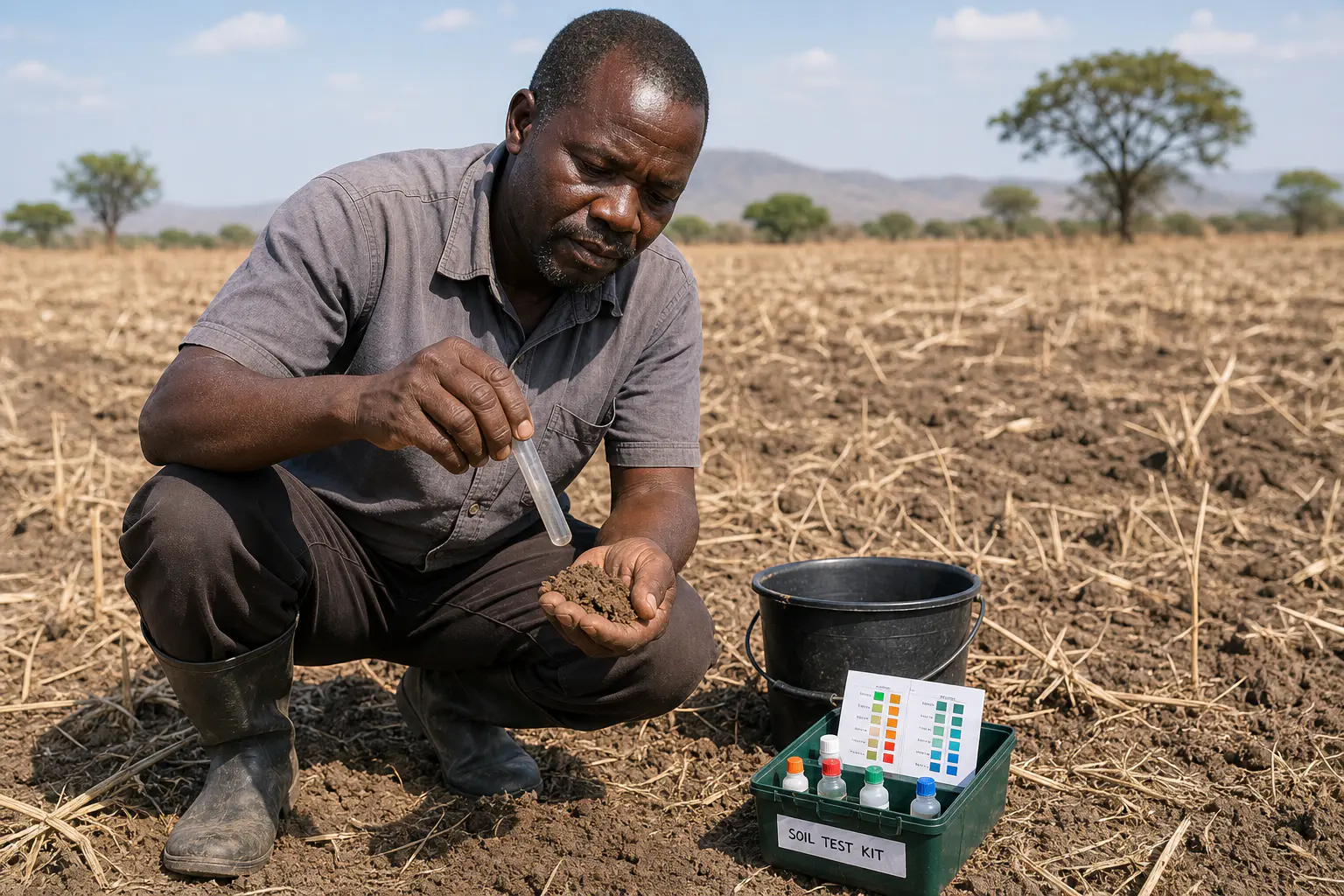
A calibrated meter or colour kit can screen soil when used carefully. Before buying lime, submit a representative sample and request a lime requirement.
Does low pH mean I should apply lime immediately?
Not automatically. Confirm the result, identify the intended crop and obtain a rate that considers soil texture, reserve acidity and the liming product.
How quickly does agricultural lime work?
It reacts gradually. Speed depends on fineness, moisture, mixing, soil properties and product quality. Follow the timing given with the laboratory or extension recommendation.
Should every field receive the same lime rate?
No. Fields with different soil, slope or management history may have different pH and lime requirements. Sample and manage them separately.
Disclaimer: This content is for educational purposes only. Soil and crop requirements vary. Consult an agronomist or extension officer before applying lime or making major soil-management decisions.
Related reading
Soil Fertility Management in Malawi: A Field-by-Field Plan
Map weak field patches, allocate manure and fertiliser carefully, and improve soil fertility before Malawi’s planting rains.
Why Farmers Are Switching to Nano Urea Fertiliser in Malawi
Nano urea fertilizer is changing how farmers apply nitrogen to maize fields. Learn how it works, why some farmers prefer it, and what to consider before using it in Malawi.