

Drought-Resistant Crops for Malawian Farmers
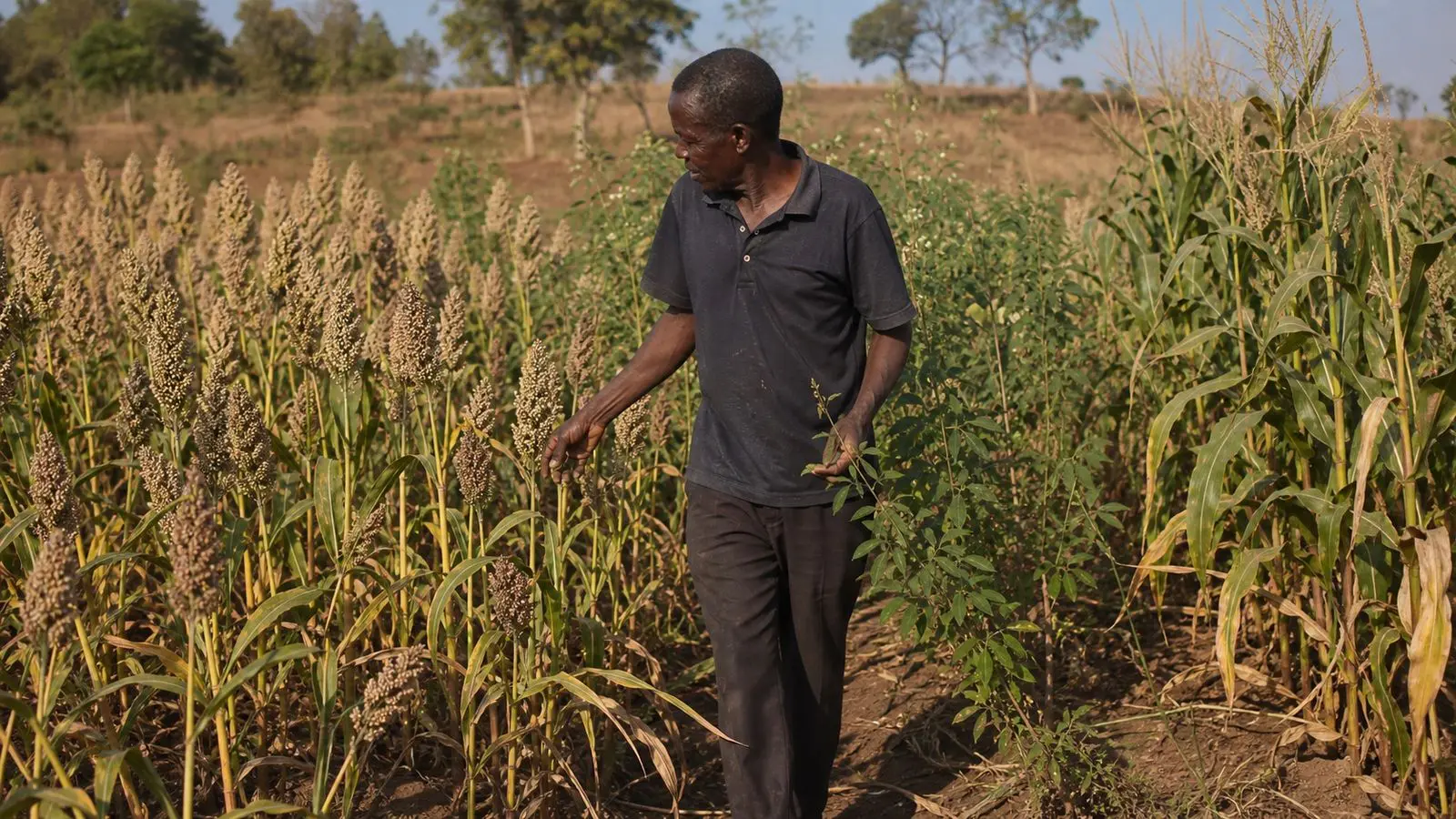
A dry spell can arrive after a farmer has already paid for seed, prepared land and planted. Drought-tolerant crops and varieties can reduce risk, but they cannot produce without water or replace good soil and field management. The practical goal is to choose crops suited to the local area, spread risk across more than one crop and use seed recommended for the district.
Contents
- What drought resistance means
- Crop options for Malawi
- Match crops to the farm
- Planting for better moisture use
- Make a low-risk plan
What Drought Resistance Means
“Drought resistant” is a useful shorthand, not a guarantee. Some crops escape drought by maturing earlier. Others tolerate heat or temporary moisture stress better than a susceptible crop. Performance still depends on rainfall timing, soil depth, pests, seed quality and management.
The World Bank’s Malawi drought-resilience profile identifies crop diversification and a wider range of food sources as important preparedness measures. This supports a basket approach: keep a crop the household knows and uses, then add one or two locally suitable alternatives instead of replacing the whole farm at once.
Crop Options for Malawi
Drought-tolerant maize
Maize remains important to most households. Drought-tolerant or early-maturing maize can reduce risk where the growing season is uncertain, but the label must refer to a released variety from a trusted seed source. CIMMYT and Malawi’s agricultural research system have developed and tested drought-tolerant maize in Malawi. Ask an extension officer or registered seed supplier which currently released variety fits the district and expected planting window. Do not reuse an old variety name without checking current availability.
Sorghum and millet
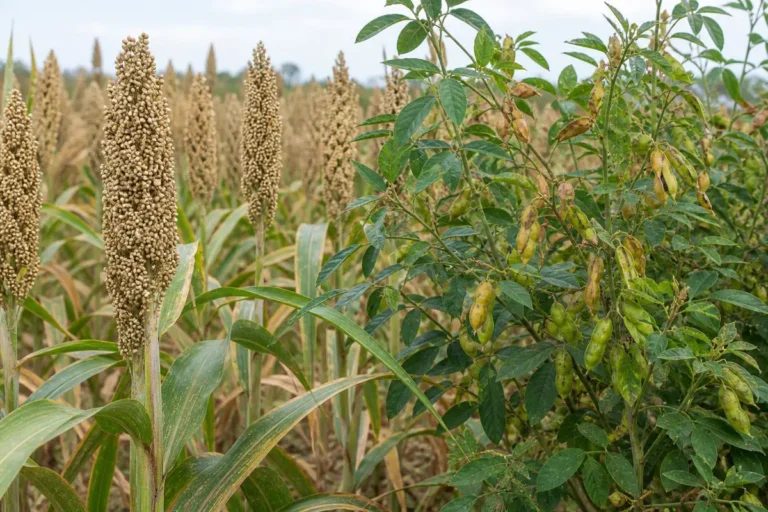
Sorghum, pearl millet and finger millet are valuable options in hotter or lower-rainfall areas. A Malawi drought-recovery programme supported improved sorghum and millet seed for suitable communities. FAO also reports that local sorghum and millets supplemented maize and strengthened food security in climate-resilience work in Malawi. These grains require suitable harvesting, bird control, processing and a clear household or market use, so confirm those practical needs before expanding the area.
Pigeon pea, cowpea and groundnut
Legumes spread risk and add food or sale options. FAO’s Malawi resilience work used cowpea, pigeon pea and dolichos bean in resilient cropping systems, including intercropping with maize. Pigeon pea and groundnut varieties have also been evaluated with Malawian farmer groups as climate conditions change. Choose a variety for the local season length and intended use. Legumes still need timely weeding and protection from relevant pests and diseases.
Cassava and sweet potato
Root crops can add another harvest pathway when rainfall is unreliable, and FAO programmes in Malawi include cassava and sweet potato among crops used for climate-resilient diversification. They are not “plant and forget” crops. Use clean planting material, manage diseases, and plan for storage, processing or staggered harvesting. Suitability varies with soil, drainage and local planting-material systems.
Match Crops to the Farm
Use local extension guidance rather than a national one-size-fits-all list.
| Agro-ecological setting | Questions to ask before choosing |
|---|---|
| Lower Shire and hot lowlands (Chikwawa, Nsanje, Balaka) | Is the crop suited to heat and shorter rainfall, and is seed available before planting? |
| Southern and eastern mid-altitude areas (Machinga, Zomba, Mangochi) | Which cereals, legumes or roots fit the local season and existing markets? |
| Central plateau (Dedza, Ntcheu, Kasungu) | Is an early-maturing variety needed, and how will dry spells affect planting time? |
| Northern highlands and plateau (Mzimba, Rumphi, Chitipa) | Does the crop fit cooler conditions, altitude and the available growing period? |
Before buying, compare maturity period, recommended zone, seed source, food preference, labour, pest risk and likely buyer. A crop that survives moisture stress but has no household use or market may not improve farm resilience.
Planting for Better Moisture Use
Start with timely land preparation so planting can follow effective rainfall. Use the spacing and seed rate recommended for the chosen crop and variety; do not copy maize spacing onto sorghum, millet or legumes. Control weeds early because weeds compete for limited water. Keep soil covered where locally appropriate, reduce erosion and add organic matter as part of a longer-term soil plan.
Avoid making a blanket fertiliser recommendation from an article. Soil condition, crop, product and local guidance matter. An extension officer can help interpret soil-test results and current recommendations. Where intercropping is used, confirm compatible crop arrangements so that one crop does not shade or crowd the other.
Make a Low-Risk Plan
Test a new crop or variety on a manageable plot first. Keep records of seed source, planting date, rainfall observations, major field operations, harvest and household or market use. Compare it with the farmer’s normal crop under the same season rather than relying on promotional claims.
Spread planting and crop choices only when local recommendations support it. Save money for replanting or an extra weeding round, but do not assume every drought response requires more inputs. After harvest, review which crop matured, which was eaten or sold, and which demanded more labour. That evidence makes the next season’s plan more realistic.
Frequently Asked Questions
Does drought-tolerant maize grow without rain?
No. It may handle some moisture stress better than a susceptible variety, but it still needs adequate water, suitable soil and timely management.
Should I replace all maize with sorghum or millet?
Usually it is safer to test a locally recommended crop on part of the farm and assess food use, labour and market demand before increasing the area.
Can I use grain from the market as seed?
Market grain may have unknown variety, germination and health. Use quality seed or clean planting material from a trusted source and follow local guidance on seed saving.
Which crop is best for my district?
There is no single answer. Ask the district extension service about the agro-ecological zone, season length, currently released varieties and local pest or disease risks.
Related Kumunda Guides
- Read the guide to water management during dry-season farming.
- Review crop rotation plans for small farms.
Image Prompts
Featured Image Prompt
Malawian smallholder farmer comparing mature sorghum, pigeon pea and maize plots under dry-season conditions, natural documentary photography, warm light, realistic rural field, no text or logos. Alt text: Farmer compares drought-tolerant crop options in a dry Malawian field.
Inline Image Prompts
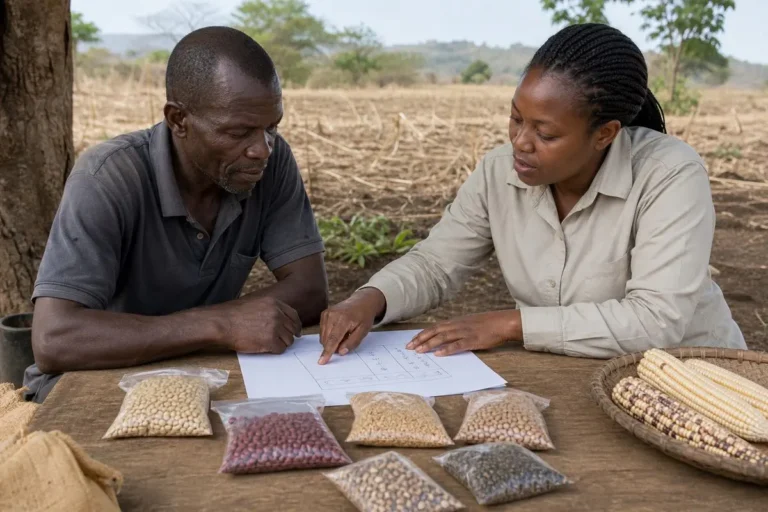
1. Close view of healthy sorghum heads and pigeon pea plants growing in a small diversified field in Malawi, natural daylight, no text or logos. Alt text: Sorghum and pigeon pea diversify a Malawian smallholder field. 2. Malawian farmer and extension officer examining labelled but unreadable seed packets and a simple field plan, respectful documentary style, no brands or text. Alt text: Farmer discusses locally suitable drought-tolerant seed with an extension officer.
*This content is for educational purposes only. Farming outcomes vary depending on soil, weather, region, and management practices. Consult a qualified agronomist or extension officer before making major farm decisions.*
Source Log
Canonical Source Log: `content/sources/K081.md`
Sources Referenced
| Claim area | Institution | URL | Access date |
|---|---|---|---|
| Malawi climate resilience and diversification | World Bank | https://documents1.worldbank.org/curated/en/099072723174522199/pdf/P17307705164f30de0a5420fbd03374ce53.pdf | 2026-08-05 |
| Drought-tolerant maize developed and released in Malawi | CIMMYT | https://www.cimmyt.org/news/three-new-drought-tolerant-maize-hybrids-released-in-malawi/ | 2026-08-05 |
| Sorghum, millet and legumes in Malawi resilience programmes | FAO | https://www.fao.org/europeanunion/projects/projects-detail/strengthening-community-resilience-to-climate-change-and-safeguarding-livelihoods-in-malawi-gcp-mlw-067-ec/en | 2026-08-05 |
| Farmer evaluation of pigeon pea and groundnut varieties | FAO | https://www.fao.org/science-technology-and-innovation/resources/stories/detail/shifting-crops-to-adapt-to-changing-climate-conditions-in-malawi/en | 2026-08-05 |
Related reading
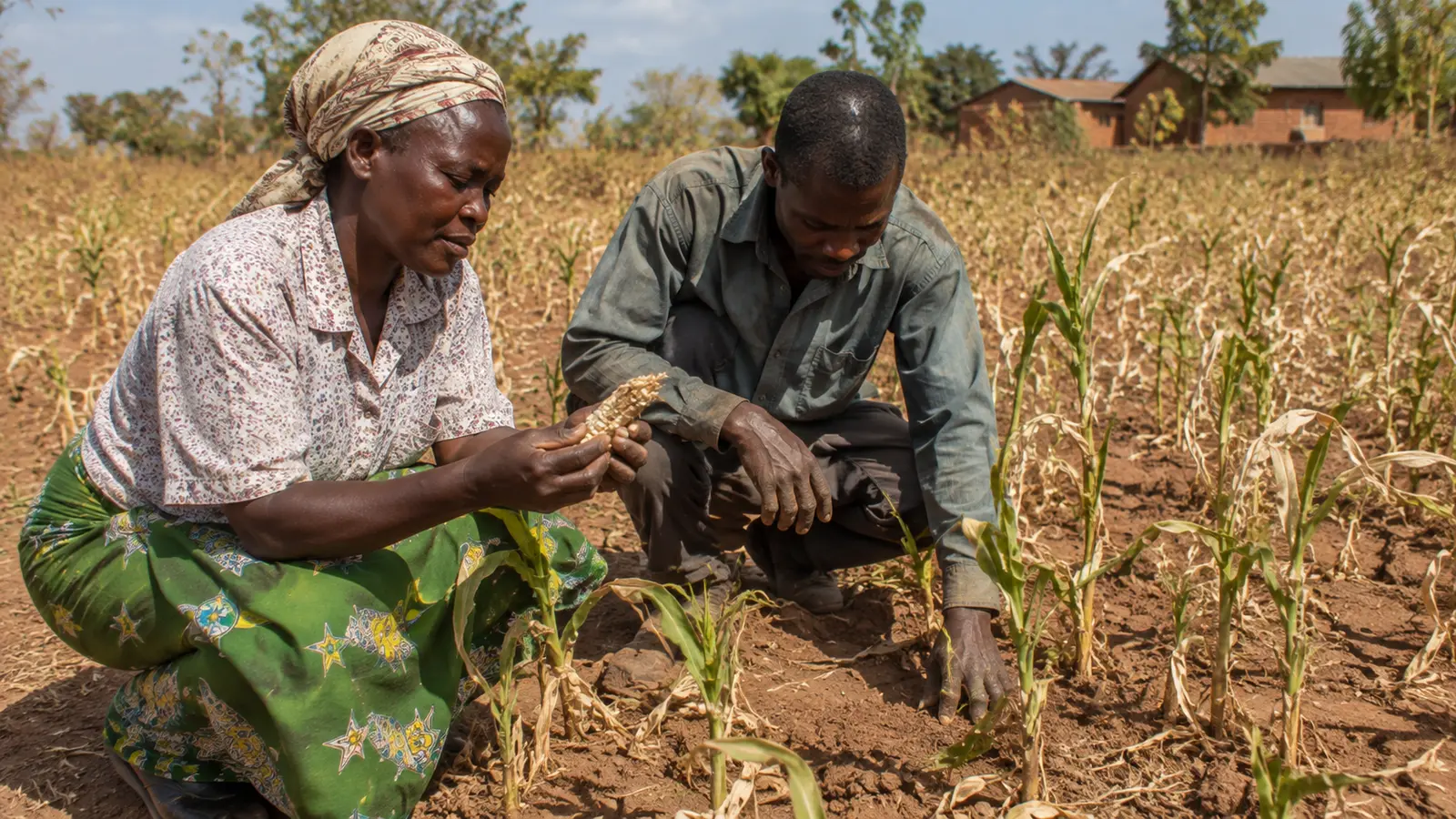
El Niño 2026/27: What Malawian Farmers Should Verify and Do Now
Separate the confirmed global El Niño advisory from Malawi-specific forecasts, then use three checks before planting.