

Integrated Pest Management for Malawi Crops
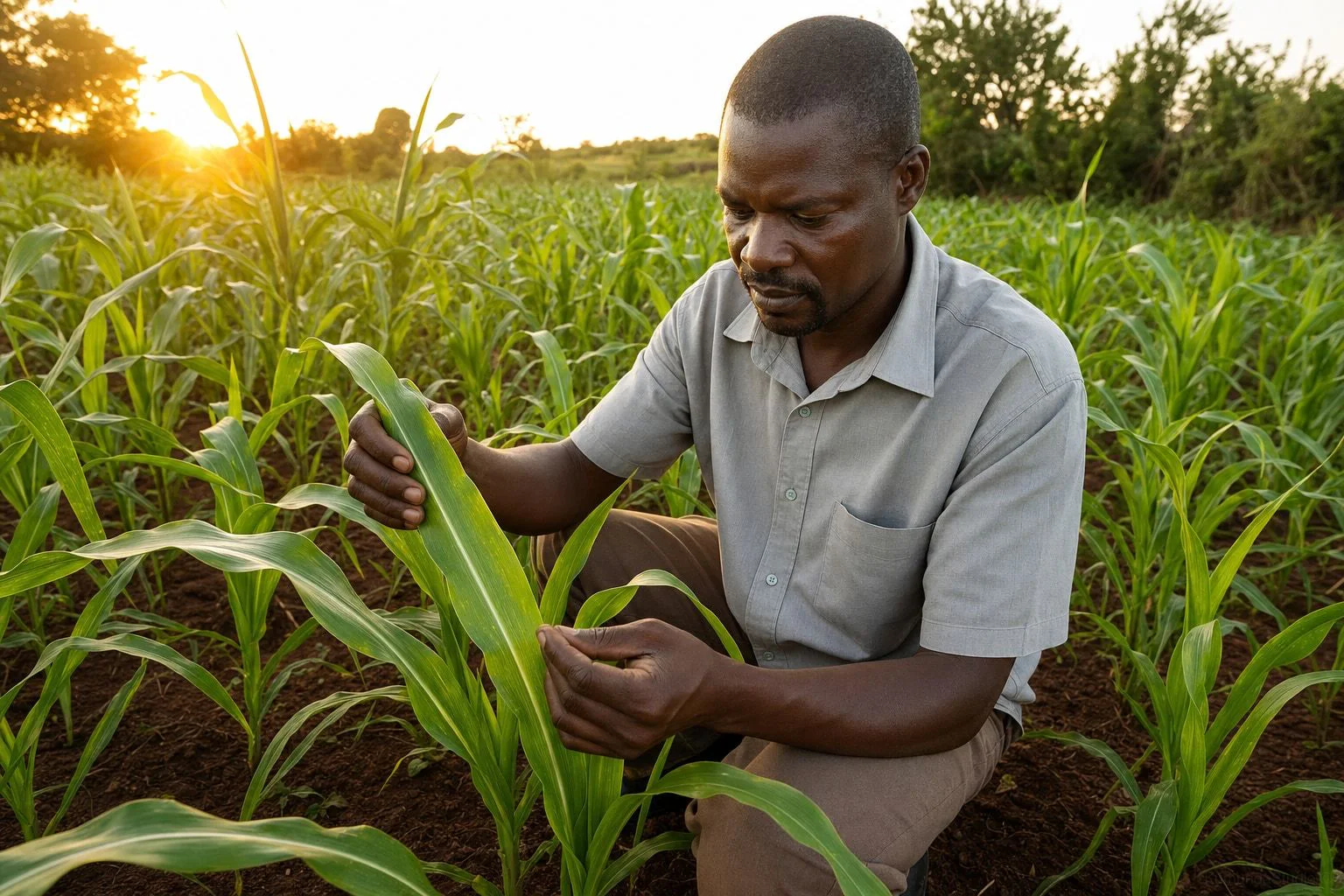
Integrated Pest Management, or IPM, helps farmers protect crops without spraying automatically whenever they see an insect or damaged leaf. The method begins with prevention, field scouting and correct identification. Farmers then compare crop loss with control costs and risks before choosing the safest response.
Fall armyworm, stem borers, aphids, whiteflies, tomato leaf miner and storage pests do not affect every field in the same way. A decision based on evidence from your field is better than a recipe.
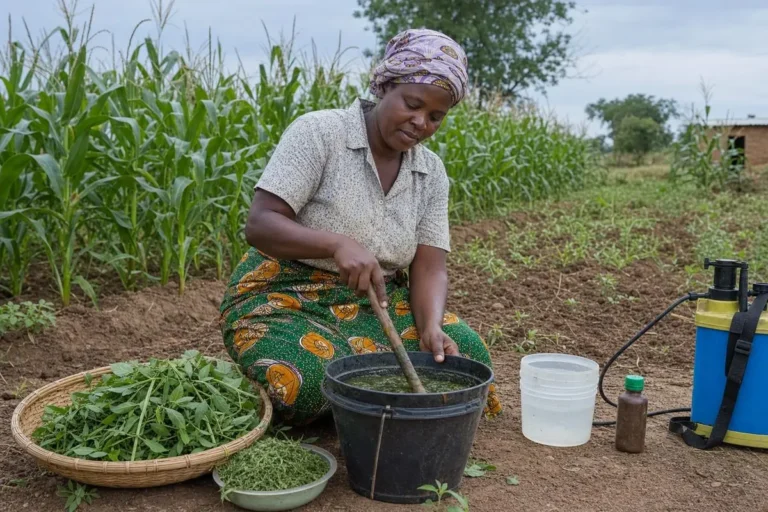
For a crop-specific example, see our practical guide to identifying, scouting and controlling fall armyworm in maize before deciding whether treatment is justified.
What IPM Means
IPM is not a single product and it does not aim to kill every insect. It combines compatible methods to keep pests below levels that cause unacceptable economic damage while reducing risks to people, animals and the environment. The basic cycle is simple: prevent, observe, identify, decide, act and check again.
A World Bank-supported Malawi programme reported 61,788 adopters of integrated pest and disease management against a target of 15,000. It also warns that traditional methods are site-specific and may lack reliable information about quantities and environmental effects. Local knowledge should be tested and documented carefully rather than turned into one recipe for every farmer. Read the Malawi programme account.
Prevent Problems Before They Grow
Prevention lowers pest pressure and makes later decisions easier.
- Use seed and varieties recommended for your crop and location by recognised Malawi extension or research services.
- Plant at the locally recommended time and spacing so crops establish strongly.
- Rotate crops where the pest or disease life cycle can be interrupted, and avoid relying on one control method every season.
- Manage soil fertility, water and weeds so crops are not weakened by avoidable stress.
- Remove or destroy confirmed infested material when extension guidance recommends it, but do not clear all residues automatically where soil cover is needed.
Scout the Field Systematically
Walk the field at least once a week during vulnerable stages, and more often when damage changes quickly. Do not inspect only the edge. For maize, the FAO fall-armyworm scouting guide recommends a W route with five stations of 10 plants 50 plants in total.
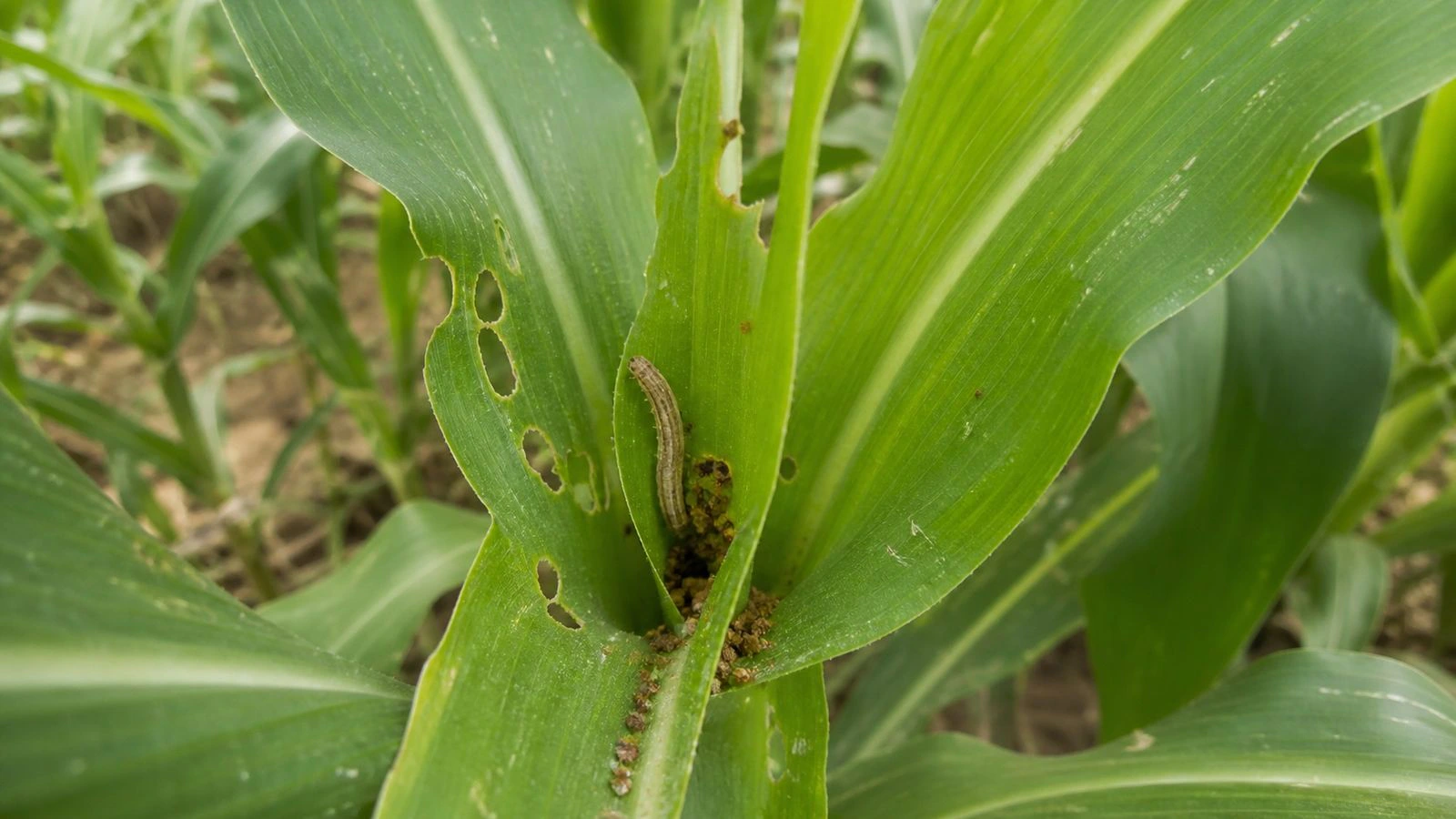
Record the date, crop stage, number of plants checked, number with fresh damage, pests or eggs found, beneficial organisms present and any action taken. In maize whorls, fresh feeding and fresh frass are more useful than old holes on leaves. Revisit the same areas to learn whether the problem is increasing, stable or declining.
Identify the Cause Correctly
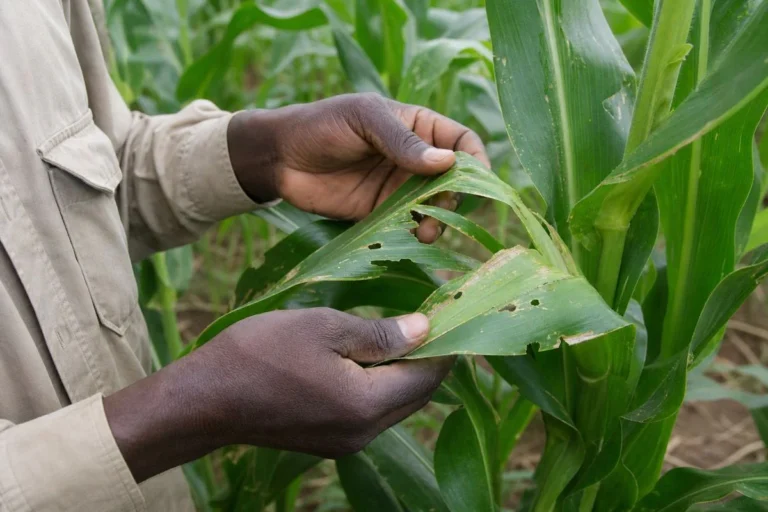
Different problems can produce similar damage. Inspect both sides of leaves, stems, growing points, roots or stored grain as appropriate. Photograph the insect and damage, or take a safe sample to an extension officer or plant clinic.
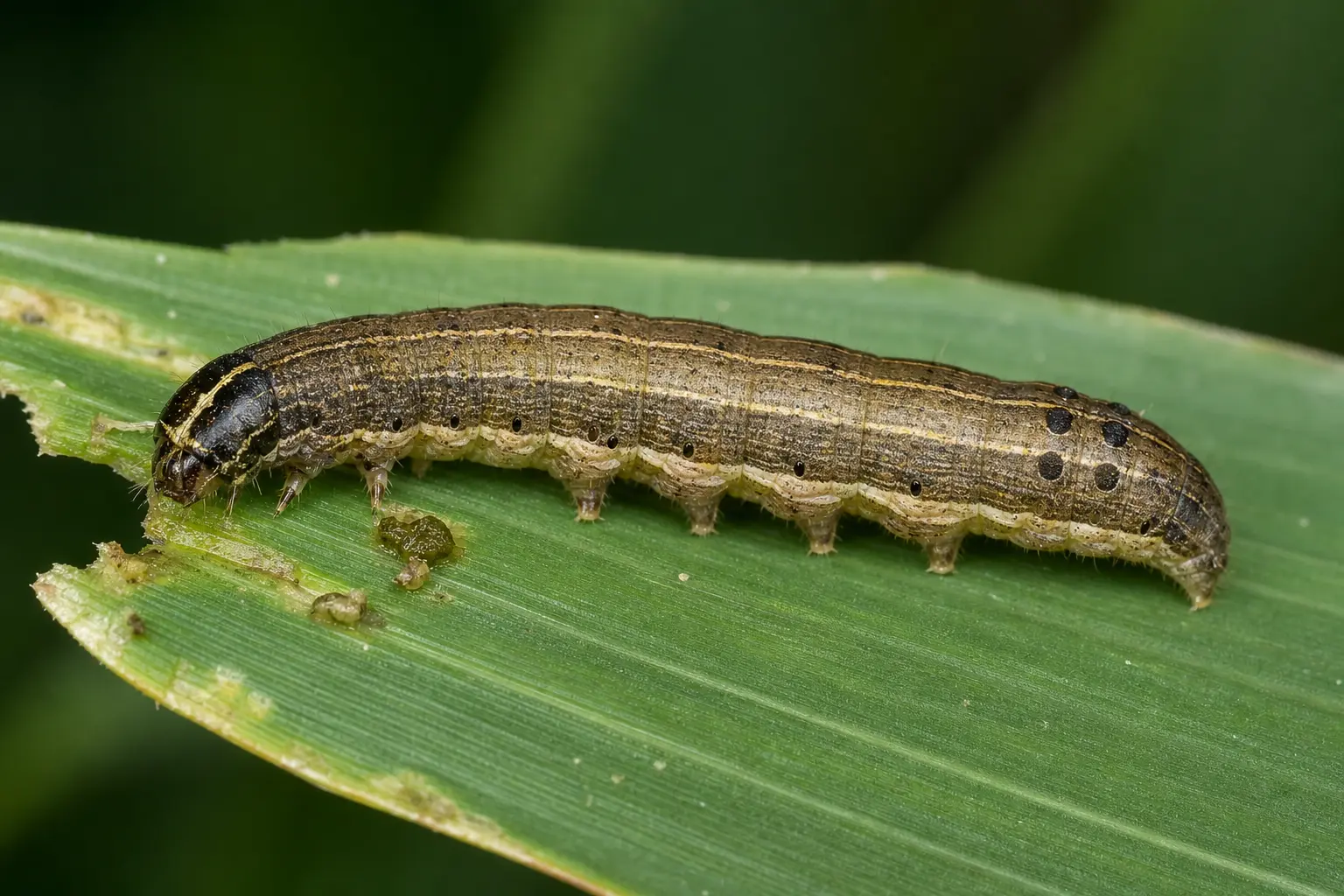
For fall armyworm, look for fresh window-like or ragged feeding in the maize whorl and fresh frass. A developed larva may show a pale inverted Y on its head and four dark spots forming a square near the rear. Do not identify it from colour alone, and do not confuse old damage with a current infestation.
Decide Whether Control Is Necessary
Seeing one insect does not mean the whole field should be sprayed. Consider the crop stage, the proportion of plants with current infestation, whether damage is increasing, the crop’s ability to recover, the number of natural enemies and the expected value of the crop.
There is no single action threshold for every crop, pest, district and season. Ask a local extension officer for the current recommendation when the decision could involve significant cost or pesticide use. FAO notes that fall-armyworm damage can look severe while maize may compensate, so treatment decisions should not be based on appearance alone. See FAO’s African IPM guidance.
Use a Control Ladder
When action is justified, begin with the lowest-risk effective method.
Mechanical and physical
Hand-pick egg masses or young caterpillars in a small plot, remove a confirmed infested plant when appropriate, or use crop-specific nets and barriers.
Cultural
Adjust planting practices, rotation, sanitation or crop diversity using locally validated advice.
Biological
Conserve predators, parasitoids and naturally occurring pathogens; use a registered biological product when one is approved for the crop and pest.
Pesticide as a last resort
Use only a product currently registered in Malawi for that crop and pest. Follow the label for dose, protective clothing, mixing, application, re-entry and pre-harvest intervals. Never increase the dose, combine products without approved instructions, reuse pesticide containers or buy an unlabelled decanted product.
Under Malawi’s Pesticides Act, the Pesticides Control Board registers pesticides. Ask extension or the Board for the current register because registrations can change.
Protect Farmers’ Friends
Ladybird beetles, lacewings, spiders, ants, earwigs and parasitoid wasps can reduce pest populations. FAO scouting guidance encourages farmers to record these natural enemies alongside pest damage. Avoid unnecessary broad-spectrum spraying, especially when beneficial insects are already active. Flowering field margins can support useful insects, but plant choices should suit the farm and should not become weed or pest hosts.
Where to Get Help in Malawi
Take clear photographs, an affected crop part and your scouting notes to the nearest Extension Planning Area office, extension officer or available plant clinic. A 2025 study found that plant clinics strengthen diagnosis and extension services in Malawi, while noting shortages of trained staff and transport. Read the Malawi plant-clinic study.
Malawi is also expanding digital pest surveillance with support from FAO and the International Plant Protection Convention, linking agricultural research, crop development and extension services. Read the 2026 FAO Malawi update.
Frequently Asked Questions
How often should I scout?
Start with once a week during vulnerable stages and increase the frequency when fresh damage or pest numbers are changing quickly.
Should I spray when I see holes in maize leaves?
Not automatically. Check for fresh whorl damage, fresh frass and a live infestation, then consider crop stage, infestation level and natural enemies.
Are homemade botanical sprays always safe?
No. Strength, effectiveness and risks vary with the plant, preparation, crop and dose. Use only a locally validated recommendation and seek extension advice before applying an unregistered mixture to food crops.
What if I cannot identify the pest?
Do not guess. Photograph the pest and damage, keep scouting notes and ask an extension officer or plant clinic before spending money on control.
Trusted References
- FAO: Fall armyworm scouting guidance
- FAO: Integrated management of fall armyworm on maize in Africa
- Malawi Pesticides Act and the Pesticides Control Board
- World Bank: Integrated pest and disease management adoption in Malawi
- Banda, Kadzamira and Phiri: Malawi plant-clinic study
- FAO Malawi: Digital plant-health surveillance
Disclaimer
This guide is educational. Pest pressure, crop response and registered products change by crop, district and season. Confirm important treatment decisions with a qualified agricultural extension officer, plant-health professional or the Malawi Pesticides Control Board.
Related reading
Botanical Pest Control in Malawi: A Safer Guide for Farmers
Learn how to assess botanical pest treatments safely through correct identification, prevention, field monitoring and approved-product guidance.
Fall Armyworm in Maize: How to Control It in 2026 and 2027
Learn how to scout maize, protect natural enemies and use integrated fall armyworm control safely in Malawi.